“Opportunity”: When asked to describe this moment for the U.S. peacebuilding field, this was the most common word that hundreds of participants at the “American Peacebuilding as a Crossroads” conference chose. It would have been understandable if participants had...
Governance
Military Might Without Security: Why Force is Not Enough to Address Hemispheric Challenges
The U.S. government has launched a strategy to restore “American preeminence” in the Western Hemisphere through largely military means, “identifying drug and human trafficking” as a primary threat to U.S. security. Since September 2025, the U.S. military has conducted...
At the Crossroads, Always: Peace Studies for a Perilous Moment
In July 1989, the Annals of the American Academy of Political and Social Science published a special issue entitled “Peace Studies: Past and Future.” These essays were to explain the significant growth of American collegiate programs examining problems of war, peace,...
Past as Prologue: Reclaiming the Journey of American Peacebuilding
American peacebuilding stands at a crossroads. To chart the way forward, we must recall and reclaim the core ideas, adaptations, and innovations that shaped earlier federal investments in the study and promotion of peace—particularly those surrounding the creation and...
Congress Has a Chance to Lead on Peace – Again
As the United States navigates a new war in the Middle East and other global conflicts persist, the U.S. Congress should assert its vast power to promote peace. Members on both sides of the aisle have played pivotal roles in shaping past U.S. initiatives aimed at...
How to Design A Governance System for All in Afghanistan
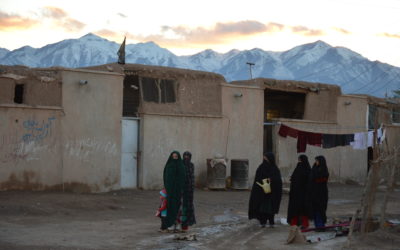
The federalism-unitarism debate In today’s Afghanistan, few debates cut as sharply across ethnic lines as the one over whether the state should be federal or unitary. Many Pashtun elites have long favored a unitary state, arguing that federalism could lead to the...
Is Peacebuilding Possible in Afghanistan?
When the Taliban took over Kabul in August 2021, the Taliban asserted that the war was over and that they now had control of the entire country. But just a year into Taliban control, an armed opposition front is taking shape, albeit only in a few provinces. Some...
Preventing Violence in the 2015 Nigerian Election
Laurie Nathan In 2015, Nigeria held elections that were widely expected to lead to large-scale violence. The risk derived in part from the country’s severe regional tensions, which included the religious and political cleavage between the North and the South, as well...
Toward Quality Peace
Peter Wallensteen The notion of quality peace is gaining momentum. Its origin stems from a growing interest in strategic peacebuilding and the search for post-war conditions that will prevent the recurrence of war. One result of this interest is the development of the...
Good Governance as a Path to Peace
Conor Seyle In recent decades, we’ve seen significant growth of social science knowledge on the causes of violent conflict and the conditions for conflict prevention. As a result, the field of peace studies is increasingly reaching a consensus on what predicts peace....
Multidimensionality in Governance Reform
Kristen Wall War is not inevitable or a condition of human nature. Many of the factors and policies that affect prospects for peace are determined by the interrelated governance systems of states, civil society, and international bodies that regulate power and...