“Opportunity”: When asked to describe this moment for the U.S. peacebuilding field, this was the most common word that hundreds of participants at the “American Peacebuilding as a Crossroads” conference chose. It would have been understandable if participants had...
United States
Dawn or Dusk? Three Emergent Dynamics Facing Peacebuilding
Are we facing the dusk or dawn in the field of peacebuilding? Yes! Peacebuilding approaches that evolved from the end of the Soviet Union to the COVID pandemic are under duress, if not in collapse. Many analysts try to fit the emergent shape-shifting of U.S. domestic...
Military Might Without Security: Why Force is Not Enough to Address Hemispheric Challenges
The U.S. government has launched a strategy to restore “American preeminence” in the Western Hemisphere through largely military means, “identifying drug and human trafficking” as a primary threat to U.S. security. Since September 2025, the U.S. military has conducted...
At the Crossroads, Always: Peace Studies for a Perilous Moment
In July 1989, the Annals of the American Academy of Political and Social Science published a special issue entitled “Peace Studies: Past and Future.” These essays were to explain the significant growth of American collegiate programs examining problems of war, peace,...
Past as Prologue: Reclaiming the Journey of American Peacebuilding
American peacebuilding stands at a crossroads. To chart the way forward, we must recall and reclaim the core ideas, adaptations, and innovations that shaped earlier federal investments in the study and promotion of peace—particularly those surrounding the creation and...
Congress Has a Chance to Lead on Peace – Again
As the United States navigates a new war in the Middle East and other global conflicts persist, the U.S. Congress should assert its vast power to promote peace. Members on both sides of the aisle have played pivotal roles in shaping past U.S. initiatives aimed at...
Machi/Nations of Indigenous Peace & Poetry: The Wolves We Feed
ᏅᏩᏙᎯᏯᏓ. Nvwadohiyada. What is peace, and what does it have to do with poetry?
As Students (and Nation) Demand Action, Notre Dame Democrats Go to DC
Gun violence has become ubiquitous in the United States; when you mention a recent mass shooting, you need to clarify which one. How does our country allow for this? What kind of a country fails to provide the most basic of all needs – security?
Let’s Turn It Around: Breaking the Cycle of Violence, Together
It is said that guns don’t kill people. Tell that to the thousands of family members, not only in our community but across the country, that have watched a loved one suffer or have buried a loved one as a result of gun violence. And the worst part is, the ripple effect goes on and on. No one wins.
Seven Peacebuilding Reflections on Violent Extremism
What have peacebuilding experts learned from twenty years of counterterrorism? Here are seven reflections. 1. Violent extremism results from fear and frustration paired with the fantasy of a “pure” society. Since 2001, Muslims have spoken out about the stigma they...
Locating Agency for Refugees
According to UNCHR, the United Nations refugee agency, at the end of 2019 there were 79.5 million people forcibly displaced worldwide, including 26 million refugees and 4.2 million asylum seekers. The percentage of the world’s population that are displaced is at an...
The Convention on the Rights of the Child and the Failure to Protect Refugee Children on the U.S.-Mexico Border
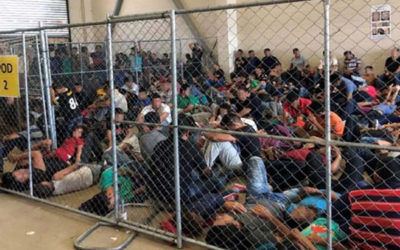
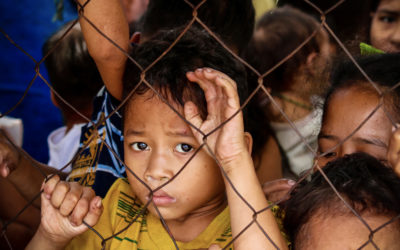
The children who cross Mexico and arrive at the U.S. border are not “immigrants,” not “illegals,” not merely “undocumented minors.” Those children are refugees of a war, and, as such, they should have the right to asylum. But not all of them have it.[1] In the summer...
How to Sustain the Global Black Lives Matter Movement
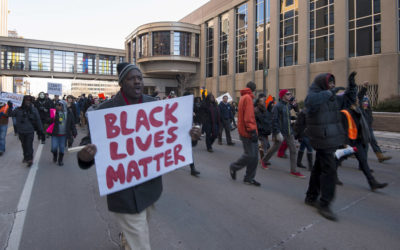
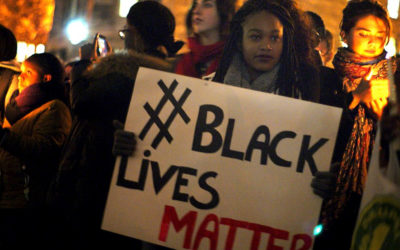
Emmanuel Cannady “Daddy changed the world.” - Gianna Floyd In those words, George Floyd’s six-year-old daughter succinctly captured the global significance of her father’s tragic murder. Together with the outrage of Breonna Taylor and Amaud Arbery’s murders, the...
Between Disruption and Coordination: Building Insider-Outsider Strategies
Ann Mische In recent months we have seen clashing imaginaries (the set of values, narratives, and symbols through which people make sense of the social spaces they occupy) at play in the wave of protests for Black lives after the killing of George Floyd in...
Justice through Trauma Healing
Helina Haile In May 2015, Chicago became the first municipality in the United States to pass reparations for racially-motivated police torture. The reparations ordinance provided redress for the survivors of police torture under Chicago Police Commander Jon Burge...
The UN, the EU, the U.S.: The Triumph of ‘Team Work’
Clara Portela is Assistant Professor of Political Science at Singapore Management University and Visiting Professor at the College of Europe. When the Iran nuclear deal was signed, it was celebrated as a diplomatic success, especially for the United States. Media...
Trump Should Support, Not Disrupt, the Iran Deal
Kelsey Davenport is Director for Nonproliferation Policy at the Arms Control Association. Donald Trump faces a tough array of foreign policy challenges, but noticeably absent from that list is the threat of a nuclear-armed Iran. If Trump plays his cards right, he can...
The Leverage Embedded in the Iran Deal
George Lopez is the Rev. Theodore M. Hesburgh, C.S.C., Professor Emeritus of Peace Studies at the Kroc Institute for International Peace Studies. Since the election of Donald Trump, members of the arms control community have argued that the new administration must...
Whither the War in Syria?
David Cortright is the Director of Policy Studies and the Peace Accords Matrix at Notre Dame’s Kroc Institute for International Peace Studies. The Trump administration will face one of its most difficult foreign policy tests in Syria, with a high likelihood of...
Reflections on Human Rights in the New Administration
Jennifer Mason McAward is associate professor of law at the University of Notre Dame and director of the University’s Center on Civil and Human Rights. I’m often asked what the difference is between civil and human rights. My response is that they are, in large part,...